How to Read Tarot Cards with a Free Tarot Card Generator: The Ultimate Guide for Beginners
November 20, 2025 | By Aria Campbell
Ever felt a pull towards the enchanting world of Tarot? You're not alone. For centuries, these 78 cards have served as a powerful tool for introspection, guidance, and self-discovery. If you've ever felt drawn to their beautiful imagery but intimidated by their complexity, you're in the right place. This guide is designed to demystify the process and show you how to read tarot cards with confidence. So, what is tarot reading at its core? It's a dialogue with your inner self, and by the end of this article, you'll have the foundational knowledge to start that conversation. Ready to unlock your intuition? Begin your journey with a free tarot card reading to see the cards in action.
What is Tarot Reading? A Beginner's Introduction
Tarot reading isn't about predicting a fixed future; it's a practice using illustrated cards to gain insight into your past, present, and potential future. The cards act as a mirror, reflecting the energies around a situation. Interpreting their symbolism helps you access your intuition, clarify your circumstances, and make empowered decisions.
The Ancient Roots: A Brief History of Tarot
Originally a 15th-century Italian card game for nobles, tarot evolved into a tool for divination by the 18th century. The Rider-Waite-Smith deck, created in 1909, revolutionized the practice with its fully illustrated cards, making tarot's rich symbolism accessible to all and setting the standard for modern decks.
Why Learn Tarot? Self-Discovery & Guidance
Learning tarot is like learning the language of your subconscious. It offers a framework to explore your feelings without judgment, helping you identify obstacles, see your strengths, and consider new perspectives. Ultimately, tarot empowers you to become an active creator of your own life, providing clarity when you feel lost.
Understanding Your Tarot Deck: The Cards Unveiled
A standard tarot deck consists of 78 cards, divided into two main sections: the Major Arcana and the Minor Arcana. Grasping this structure is the first step in learning to read the cards effectively. Each part tells a different piece of a larger story—your story.
The Major Arcana: The Journey of the Fool
The 22 Major Arcana cards represent significant life lessons and major archetypal themes. This sequence, often called "The Fool's Journey," starts with The Fool (new beginnings) and ends with The World (completion). A Major Arcana card in a reading signals a powerful, transformative energy that demands your attention.
The Minor Arcana: Daily Lessons & Experiences
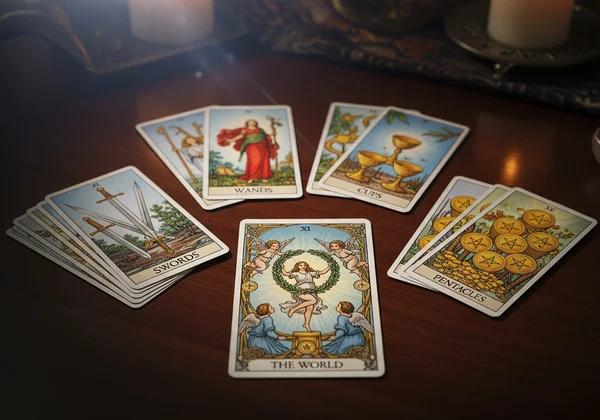
The 56 Minor Arcana cards reflect day-to-day situations, challenges, and emotions. They are divided into four suits, each corresponding to a different aspect of life:
- Wands (Fire): Passion, creativity, action, and ambition.
- Cups (Water): Emotions, relationships, intuition, and feelings.
- Swords (Air): Thoughts, challenges, intellect, and communication.
- Pentacles (Earth): The material world, finances, career, and physical health.
Understanding the Minor Arcana helps you see how grand life lessons are playing out in your everyday reality. You can explore these cards right now with an online tarot deck.
Choosing & Connecting with Your First Tarot Deck
Choosing your first deck is an intuitive process. While the Rider-Waite-Smith is a great starting point for its clear symbolism, the most important factor is your personal connection to the artwork. Pick a deck that speaks to you. Once you have it, spend time shuffling the cards and looking at each image to connect with its energy.
Mastering the Art of Asking Tarot Questions
The quality of your tarot reading depends on the quality of your question. Clear, focused, and empowering questions yield more insightful answers.
Formulating Clear & Empowering Questions
The best tarot questions are open-ended, empowering you to explore possibilities. Instead of asking "Will I get the job?" try "What can I do to improve my chances of getting the job?" This shift invites actionable advice. Focus on questions that start with "What," "How," or "Why" to seek guidance rather than a simple verdict.
What Not to Ask Tarot Cards: Avoiding Pitfalls
For an ethical practice, avoid certain questions. Don't ask about other people without their consent. Avoid medical, legal, or financial questions that require a licensed professional. Lastly, don't ask the same question repeatedly if you dislike the answer. Trust the guidance and let the situation evolve.
Interpreting Tarot Card Meanings: Beyond the Surface
Learning the book meaning of each card is just the start. True mastery comes from blending that knowledge with your intuition to create a personal, powerful message.
The Power of Upright vs. Reversed Meanings
A card that appears upside down is "reversed." This doesn't automatically mean it's negative. A reversal often points to the card's core energy being blocked, delayed, or internalized. For example, the upright Sun signifies joy, while a reversed Sun might suggest difficulty in seeing the joy that's already present.
Trusting Your Intuition: Personalizing the Message
Your intuition is your most valuable tool. When you look at a card, notice what colors, symbols, or feelings it evokes. This intuitive technique builds a personal connection. While official meanings provide a foundation, your gut feelings and personal insights are often the most relevant part of the message.
Reading Cards in Context: Storytelling with Tarot
A single card is a snapshot; multiple cards tell a story. In a spread, look for connections like repeating suits or numbers. Reading tarot card combinations is like building a narrative where each card's position (e.g., Past, Present, Future) contributes to a cohesive message.
Simple Tarot Spreads for Practical Guidance
You don't need complex spreads for a meaningful reading. Simple spreads are powerful, direct, and perfect for beginners to practice their skills and gain immediate insight.
The One-Card Daily Draw: Your Instant Insight
The one-card pull is a perfect daily ritual to check in with the energy of your day. Each morning, ask something like, "What energy should I focus on today?" The card you draw provides a focal point for reflection and helps build your relationship with your intuition. You can try a one card tarot pull right now to see how it works.
The Three-Card Spread: Past, Present, Future
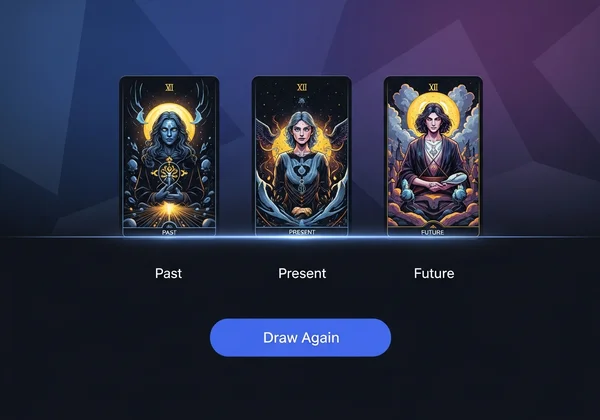
The three-card spread is one of the most versatile and popular readings. Its classic format—Past, Present, and Future—provides a clear narrative for your situation.
- Card 1 (Past): The foundational energies and past events that led to the current situation.
- Card 2 (Present): The current state of affairs, including the central challenge or focus.
- Card 3 (Future): The potential outcome or direction the energy is heading if things continue on their current path.
This spread offers a comprehensive yet concise overview, making it perfect for exploring specific questions.
Practice Your Skills with Our Free Tarot Card Generator
The best way to learn is by doing. While guides are essential, hands-on practice builds true confidence. Our website offers a seamless way to apply what you've learned. With our free tarot card generator, you can draw cards instantly, making it the perfect tool for daily practice.
With these foundational insights, you're ready to unlock the wisdom of the tarot. Remember that becoming a confident reader is a journey, not a destination. Be patient with yourself, trust your intuition, and embrace the process of learning. The most powerful way to integrate this knowledge is by putting it into practice. Visit the Tarot Card Generator to draw your cards today and begin your personal dialogue with the tarot.
Frequently Asked Questions About Learning Tarot
What is the best way to start learning tarot cards?
The best way is to combine study with daily practice. Choose a deck like the Rider-Waite-Smith and focus on one card a day, journaling your own impressions before looking up the meaning. Using an interactive tool like a random tarot generator provides consistent, hands-on experience.
How do you shuffle tarot cards correctly?
There's no single "correct" way to shuffle. The goal is to randomize the cards while focusing on your question. Use a riffle shuffle, an overhand shuffle, or simply mix the cards on a table. Choose whichever method feels comfortable and helps you center your energy.
What kind of questions can I ask tarot cards?
Ask open-ended questions that promote self-reflection. For example, instead of "Does my partner love me?" ask, "What should I be aware of in my relationship?" Focus on your own path using questions that start with "What," "How," or "Why" for the most insightful answers.
Can tarot cards give you yes or no answers?
Tarot is more nuanced than a simple yes/no, but it can be done. Some readers use special spreads or look for a majority of "positive" or "negative" cards. For now, a three card reading can provide helpful context around a yes/no question.
Is it okay to read tarot for myself?
Yes, reading for yourself is a powerful way to foster personal growth and self-reflection. It helps you connect with your intuition to gain clarity. While staying objective can be a challenge, it's a skill you can develop with practice.