How to Read Tarot Cards with a Tarot Card Generator: Your Beginner's Guide
August 26, 2025 | By Aria Campbell
Are you drawn to the beautiful imagery and profound symbolism of tarot cards? Many beginners feel a pull towards this ancient practice but are unsure where to begin. The deck of 78 cards can seem intimidating, filled with mysterious figures and complex meanings. But what if you could learn the essentials in a clear, empowering way? This guide is designed to demystify the process of learning how to read tarot cards, offering a simple path for absolute beginners to connect with their intuition and unlock powerful self-discoveries. Are you curious about tarot but feel overwhelmed by where to start?
Learning to read tarot is like learning a new language—the language of your inner self. It's a journey of exploration, and you don't need any special gifts to begin. All you need is an open mind, a willingness to learn, and the right tools to guide you. Let's take the first step together and show you how to start your personal tarot practice today with a free tarot card reading.
What is Tarot Reading? Understanding the Basics
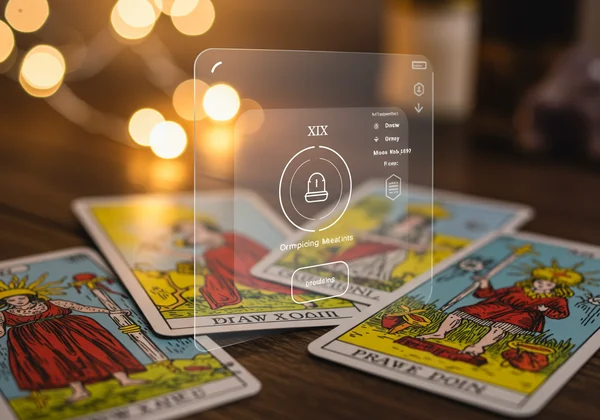
Before you draw your first card, it's essential to understand the foundation of this practice. A solid grasp of what tarot is—and what it isn't—will shape your entire experience. It’s less about predicting a fixed future and more about exploring the potential that lies within you and your current circumstances.
More Than Fortune-Telling: Tarot as a Tool for Self-Reflection
A common misconception is that tarot reading is solely about fortune-telling. While it can offer insights into potential outcomes, its true power lies in its ability to act as a mirror to your subconscious. Tarot is a powerful tool for self-reflection, personal growth, and accessing your intuition. Each card represents a universal archetype or situation, providing a new lens through which you can view your life's challenges and opportunities.
Instead of asking, "Will I get the job?" you can use tarot to explore, "What can I do to improve my chances of career success?" This shift in perspective turns tarot from a passive prediction tool into an active guide for empowerment. It helps you understand your own feelings, uncover hidden obstacles, and recognize your inner strengths.
The Anatomy of a Tarot Deck: Major and Minor Arcana Overview
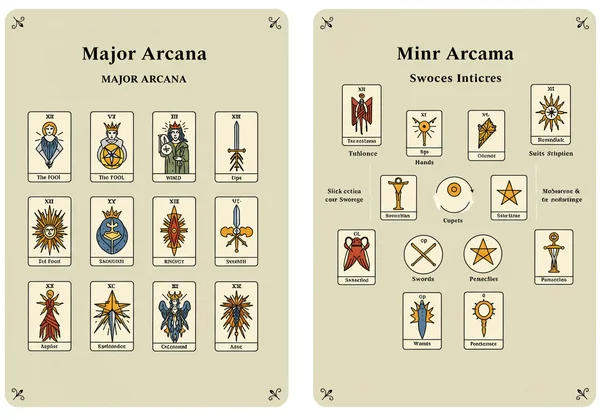
A standard tarot deck, like the classic Rider-Waite-Smith system, contains 78 cards. These are divided into two main sections: the Major Arcana and the Minor Arcana. Understanding this structure is a key step in any good tarot reading guide.
-
The Major Arcana: This consists of 22 cards, starting with The Fool (0) and ending with The World (XXI). These cards represent major life events, significant spiritual lessons, and the overarching themes of your personal journey. When a Major Arcana card appears in a reading, it signals that you are dealing with a powerful and impactful life theme.
-
The Minor Arcana: This comprises the remaining 56 cards, which are divided into four suits: Wands, Cups, Swords, and Pentacles. These cards typically relate to the everyday situations, challenges, and people in your life. They provide context and detail to the larger themes presented by the Major Arcana cards, helping you understand the "how" and "why" of your current situation.
Your First Steps to Reading Tarot Cards
Now that you understand the basic framework, you're ready to start the practical steps of reading the cards. The process is a blend of structure and intuition. These initial actions will help you build a confident and meaningful practice.
Choosing Your Tarot Deck: Physical vs. Online Generators
Your first decision is what kind of deck to use. Many people love the tactile experience of a physical deck, but for a beginner, this can also mean a significant upfront cost and the pressure of choosing the "perfect" one. This is where modern technology offers a fantastic alternative.
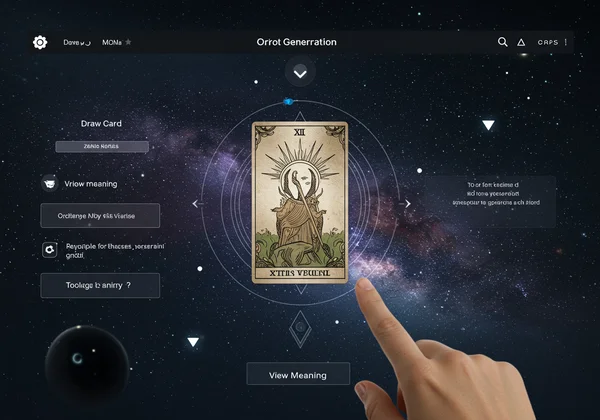
An online tarot deck, such as a tarot card generator, is an ideal starting point for tarot for beginners. It allows you to begin practicing immediately without any cost or commitment. Our tool provides instant access to beautifully rendered cards and their meanings, making it easy to learn on the go. The elegant animations also add a touch of magic to the digital experience, helping you focus your energy.
Setting Intentions and Creating a Sacred Space
Whether you're using a physical deck or our online tool, the energy you bring to a reading matters. Before you draw any cards, take a moment to center yourself. You don't need elaborate rituals; a few deep breaths can be enough to clear your mind.
Think about the question or situation you want clarity on. This is called setting your intention. Your intention focuses the energy of the reading and helps you connect more deeply with the messages of the cards. Find a quiet space where you won't be interrupted, allowing you to fully immerse yourself in the process of self-discovery.
How to Shuffle and Draw Tarot Cards Effectively: The Role of Shuffling Cards
If you have a physical deck, shuffling is a key part of the process. It's a way to infuse your energy and intention into the cards while randomizing them. There's no single "right" way to shuffle; do what feels comfortable for you.
For those using a digital tool, the randomization is handled by an algorithm designed to ensure a truly unpredictable draw. When you use our online tarot deck, you can trust that the card you receive is the one you were meant to see. The focus remains on your intention, not the mechanics of shuffling, making it a seamless and modern way to practice.
Interpreting Your Tarot Card Messages with Ease
Here comes the most exciting part: understanding what the cards are telling you. Interpretation is an art that blends established meanings with your personal intuition. Don't worry about getting it "perfect" right away; your understanding will deepen with every reading you do.
The Basics of Card Meanings: Upright and Reversed
Each tarot card has a core meaning, but its orientation—upright or reversed (upside down)—adds another layer of interpretation. Think of it this way:
- Upright: When a card is upright, its energy is generally seen as flowing freely and being expressed outwardly. It represents the primary, most direct message of the card.
- Reversed: A reversed card often suggests that the card's energy is blocked, internalized, or needs your attention. It might point to delays, internal conflicts, or an area where you need to reconsider your approach. It's not necessarily "bad," but rather a call to look deeper.
You can easily learn these meanings by practicing with an instant tarot pull, which provides detailed interpretations for both positions.
Trusting Your Intuition: Connecting the Cards to Your Life
While guidebooks and websites provide foundational meanings, the most profound insights come from trusting your intuition. Look at the images on the card. What colors, symbols, or characters stand out to you? How does the scene make you feel?
The true magic happens when you connect the card's universal meaning to the specific context of your own life and your question. For example, the Ten of Swords can look alarming, but for you, it might intuitively feel like a necessary and welcome end to a stressful situation. Your personal connection is what makes the reading uniquely yours.
Simple Tarot Spreads for Instant Insights
You don't need complex, ten-card layouts to get valuable guidance. For beginners, simple spreads are the best way to build confidence and get clear answers. Our platform is designed around the two most powerful and accessible spreads available.
The Power of a Single Card Draw: Your Daily Guidance
A one-card tarot reading is one of the most effective ways to integrate tarot into your daily life. It's a quick and simple practice that can provide a theme for your day, offer a piece of advice, or give you something to reflect on.
Drawing a single card each morning can become a powerful ritual for mindfulness and intention-setting. It’s an excellent way to learn the card meanings one by one. Ready to see what message the universe has for you today? Pull a card now and get your daily guidance in seconds.
The 3-Card Spread: Past, Present, Future Clarity
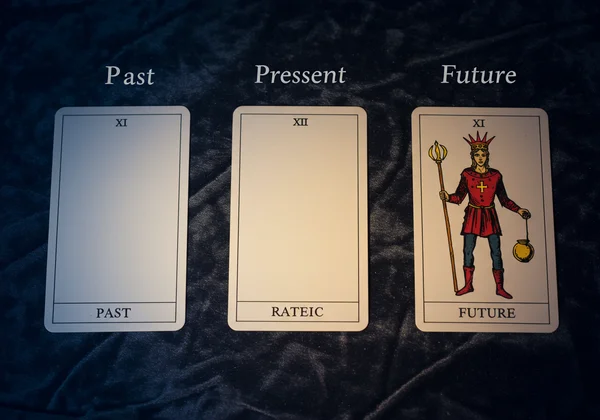
The three-card spread is another fundamental layout that offers a remarkable amount of insight. It provides a simple narrative to help you understand a situation's progression. The cards are typically laid out as:
- Past: Represents the past events and influences that have led to your current situation.
- Present: Shows what is happening in the present moment and the core of your query.
- Future: Indicates the potential outcome or direction things are heading if you continue on your current path.
This spread is perfect for gaining clarity on a specific problem or decision. You can try a three card reading to see how these energies are playing out in your life right now.
Ready to Begin Your Tarot Journey?
You now have a foundational roadmap for how to read tarot cards. Remember that this is a personal journey of discovery, not a test with right or wrong answers. You've learned that tarot is a tool for empowerment, how to start your practice with intention, the basics of interpretation, and simple spreads for immediate insight.
The best way to learn is by doing. Don't wait for the perfect moment or until you've memorized every card meaning. Your journey begins with a single step—or in this case, a single card draw. Embrace the process with curiosity and an open heart. Your intuition is waiting to speak to you.
Ready to put your new knowledge into practice? Start your reading and discover the wisdom the cards hold for you.
Frequently Asked Questions About Learning Tarot
What is the main purpose of a tarot reading?
The main purpose is not to predict a rigid future but to provide guidance and promote self-reflection. It helps you understand your circumstances on a deeper level, explore your options, and connect with your inner wisdom to make empowered decisions.
How do I shuffle tarot cards for a reading?
For a physical deck, hold the cards in your hands and mix them in any way that feels right—overhand, riffle, or simply spreading them out. The goal is to randomize them while focusing on your question. For ultimate convenience, an online tool like a random tarot card generator handles this process for you perfectly every time.
What are good questions to ask tarot cards?
The best questions are open-ended and focused on personal growth. Instead of asking "Will I find love?" try "What can I do to open myself to a loving relationship?" or "What lesson do I need to learn right now?" This empowers you to be an active participant in your life.
Do I need a physical tarot deck to read cards?
Absolutely not! While many people enjoy physical decks, they are not a requirement. An online tarot card generator is a fantastic, free, and accessible way for beginners to start learning and practicing immediately without the pressure of choosing or buying a deck.
How often should I do a tarot reading?
This is entirely up to you and your needs. Some people enjoy a daily one-card draw for morning guidance, while others prefer to do a more in-depth three-card reading for specific issues as they arise. Listen to your intuition; read the cards when you feel you need clarity or a fresh perspective.