Tarot Card Generator: History & Evolution - From Ancient Origins to Modern Digital Wisdom
December 5, 2025 | By Aria Campbell
Have you ever looked at a tarot card and felt a deep sense of wonder? Its rich imagery seems to hold secrets from a time long past. Where did these mysterious cards truly come from? When you understand tarot's fascinating journey—from a simple card game in Renaissance Italy to today's powerful digital tools—it transforms how you approach readings. You're connecting with a tradition that has evolved over centuries.
This journey through time reveals how a deck of cards transformed into a mirror for the human soul. We’ll explore the true origins of tarot, trace its evolution into a divination tool, and see how it has found a new, vibrant life in the digital age. This ancient wisdom is more accessible than ever, and you can experience it now with a single click.
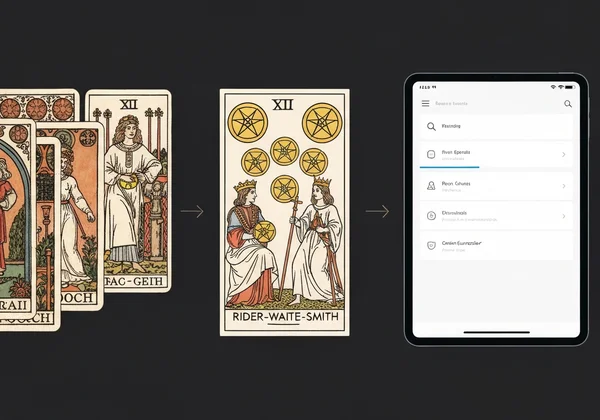
The True Origins of Tarot Cards
Many myths surround the beginnings of tarot. Some tales link the cards to ancient Egyptian priests or mystical Eastern philosophies. However, historical evidence points to a more concrete and perhaps surprising origin: the lavish courts of 15th-century Europe. The story of tarot isn't one of ancient magic, but of art, culture, and high-society entertainment.
Early Renaissance Italy: The Birth of Tarocchi
The earliest tarot decks emerged in Northern Italy around the 1440s. Initially, they weren't used for fortune-telling but for a complex card game called Tarocchi. Wealthy families like the Visconti-Sforza commissioned artists to create these beautiful hand-painted decks as symbols of their status.
These early decks consisted of two parts: four standard suits, similar to modern playing cards, and a set of 22 special trump cards. These trumps, known today as the Major Arcana, featured allegorical figures representing different aspects of medieval and Renaissance life, such as The Emperor, The Pope, Death, and The Fool. The game of Tarocchi was a favorite pastime among the nobility for centuries.
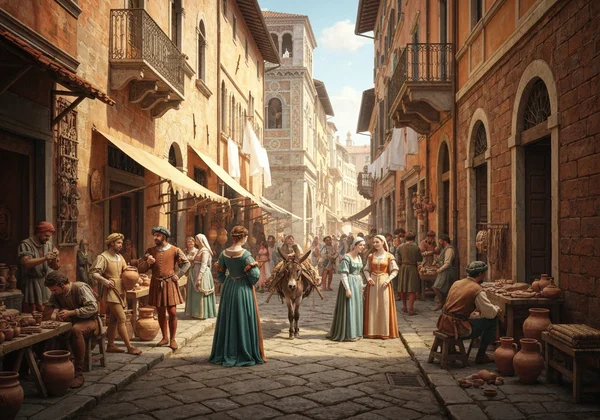
Beyond Europe: Tracing Potential Influences
While tarot cards themselves were born in Italy, the concept of playing cards was not. Card games probably came to Europe from the Mamluk Sultanate in Egypt during the 14th century. These Mamluk cards featured cups, swords, coins, and polo-sticks. These suits are considered the ancestors of Italian tarot suits: cups, swords, coins, and batons (or wands).
However, it's crucial to understand that this influence was structural—it provided the four-suit system. The symbolic, allegorical trump cards that make tarot unique were a distinctly Italian innovation of the Renaissance.
From Game to Divination: The Evolution of Tarot
So, how did a card game become one of the world's most famous tools for introspection and divination? This transformation was not immediate. It was a gradual evolution over several centuries, driven by a growing interest in mysticism, symbolism, and the hidden knowledge of the universe.
Decoding Early Symbolism: Tarot Card Meaning Origins
The meanings we associate with tarot cards today were not present in the 15th century. The original trump cards were simply illustrations of the world as Renaissance people saw it. The Emperor represented worldly power, The Pope spiritual authority, and the Wheel of Fortune the unpredictable nature of fate.
As the cards spread across Europe, people began to see deeper allegories within the artwork. These images served as a visual language that could reflect life's journey, its virtues, and its challenges. This slow shift from literal representation to symbolic meaning laid the groundwork for tarot's future role.
The Rise of Occultism: Transforming Tarot's Purpose
The most significant change in tarot's history occurred in the late 18th and 19th centuries. French and English occultists became fascinated with the cards, believing they held ancient, secret wisdom. In 1781, French scholar Antoine Court de Gébelin claimed tarot was actually an ancient Egyptian book of wisdom.
Though historically incorrect, this idea fascinated people. Later, occultists like Eliphas Lévi and members of the Hermetic Order of the Golden Dawn incorporated tarot into mystical practices, connecting it with astrology, Kabbalah, and alchemy. It was during this period that tarot's primary purpose shifted definitively from game-playing to divination.
Iconic Tarot Decks: A Brief History
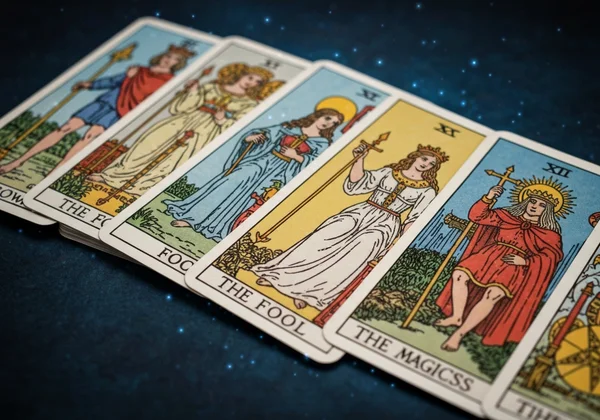
This period of mystical revival also produced some of the most influential tarot decks. The Tarot de Marseille, a woodcut-printed deck from France, became a popular standard for esoteric study. However, the most famous deck in the English-speaking world is undoubtedly the Rider-Waite-Smith deck.
Published in 1909, this deck was a collaboration between occultist A.E. Waite and artist Pamela Colman Smith. Its revolutionary feature was a first: all 78 cards had fully illustrated scenes, even the Minor Arcana (the numbered suit cards). This breakthrough made the cards far more intuitive and accessible for beginners. It's a legacy that continues to shape how we explore the cards today.
Modern Tarot & The Rise of the Tarot Card Generator
Today, tarot has stepped out of the shadows of secret societies and into the mainstream. It is widely recognized as a powerful tool for personal growth, creative inspiration, and self-reflection. Its journey from a nobleman's game to a global phenomenon reflects our timeless desire to understand ourselves and our place in the world.
Contemporary Tarot Traditions & Practices
Modern tarot is incredibly diverse. For some, it remains a form of divination used to gain insight into potential future outcomes. For many others, it is a psychological tool used for:
- Daily Guidance: Drawing a single card each morning to set an intention or reflect on the day's energy.
- Journaling Prompts: Using card imagery to unlock subconscious thoughts and feelings.
- Creative Brainstorming: Helping writers and artists overcome creative blocks.
- Mindfulness: Focusing on a card's symbolism as a form of meditation.
This modern approach empowers the user, framing tarot not as a rigid prediction of fate, but as a conversation with one's inner wisdom.
Tarot's Digital Transformation: Online Generators
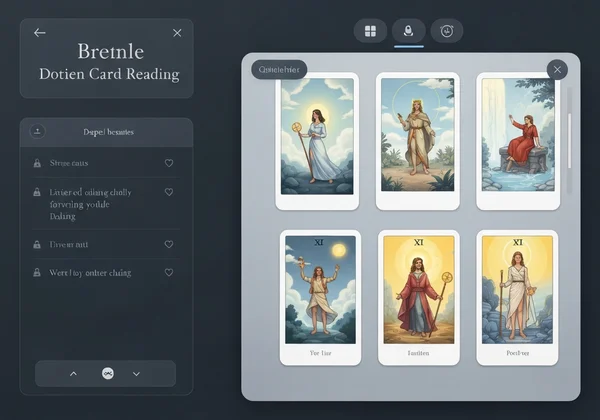
The latest chapter in tarot's evolution is its digital transformation. Technology has made the wisdom of the cards accessible to anyone, anywhere, at any time. Online tarot card generator tools remove the barriers of needing to buy, shuffle, and learn to handle a physical deck, making them perfect for beginners and busy individuals.
A well-designed digital experience can capture the essence of a reading with remarkable elegance. For example, our free tarot generator uses smooth, modern animations to replicate the satisfying feel of turning over a card, paired with clear, insightful interpretations. It honors tarot's deep history while embracing the convenience of the modern world.
Personal Growth & Self-Discovery: Tarot's Modern Role
At its heart, modern tarot is a tool for empowerment. The cards don't tell you what to do; they present archetypes, situations, and energies that act as a mirror. They reflect your current state back to you, helping you see challenges and opportunities from a new perspective.
By engaging with the cards—whether through a physical deck or a modern tarot card generator—you are not giving away your power. You are reclaiming it. You're taking time to connect with your intuition and explore the narrative of your life. This practice of self-discovery is perhaps the most valuable gift tarot has offered throughout its long and fascinating evolution.
Unveiling Tarot's Timeless Wisdom for Today
From a 15th-century Italian parlor game to a global digital phenomenon, tarot's journey is a testament to its enduring power. The cards have survived centuries because their symbolism speaks to the core experiences of being human: love, loss, struggle, and triumph.
Understanding this rich history enhances every reading, connecting you to a long lineage of seekers who have turned to these cards for clarity and insight. Today, that ancient wisdom is more accessible than ever before. You don't need to be an occultist or own a rare deck to begin your conversation with the cards.
Are you ready to see how this timeless tradition can illuminate your path? The next step in your journey is just a click away.
Draw your cards today and start your own story.**
FAQ Section
What is a tarot reading, and how did it originate?
A tarot reading is the practice of using cards to gain insight by interpreting their symbolic meanings. The cards originated as a game in the 15th century. However, using them for divination or "reading" only began in the late 18th century. French occultists adopted them, believing they held ancient mystical wisdom.
How did tarot card meanings evolve over time?
Initially, the card images were simply allegories of Renaissance life. They had no fixed divinatory meanings. As occultists adopted the cards, they assigned specific interpretations based on systems like astrology and Kabbalah. The meanings were standardized for the modern era with the 1909 Rider-Waite-Smith deck. Its fully illustrated scenes made the interpretations intuitive and widely accessible.
Are there different types of tarot traditions?
Yes, absolutely. There are many ways to approach tarot. Some traditions are predictive, focusing on potential future events. Others are therapeutic or psychological, using the cards as a tool for introspection and understanding one's inner state. There are also magical and meditative traditions that use the cards as focal points for spiritual practice. The "right" tradition is the one that resonates most with you.
Can I use an online tarot generator for authentic insights?
Yes. The authenticity of a reading comes from your intention and connection to the symbols, not the medium itself. A quality online tarot card generator provides the same archetypal imagery and random selection as a physical deck. For many people, a reliable online tool is a convenient, pressure-free way to learn the cards and find meaningful guidance.