Tarot Cards List: All 78 Cards in Order and Their Meanings
June 8, 2026 | By Aria Campbell
If you want a clear tarot cards list, the easiest place to begin is the full 78-card deck: 22 Major Arcana cards and 56 Minor Arcana cards. This guide gives you the tarot cards list in order, with quick meanings you can scan before a reading, journaling session, or daily reflection. It follows the familiar Rider-Waite-Smith style structure used by many beginner-friendly decks and digital readings. When you want to move from study into practice, a simple digital tarot pull can help you see how one card feels in context without needing a physical deck nearby.
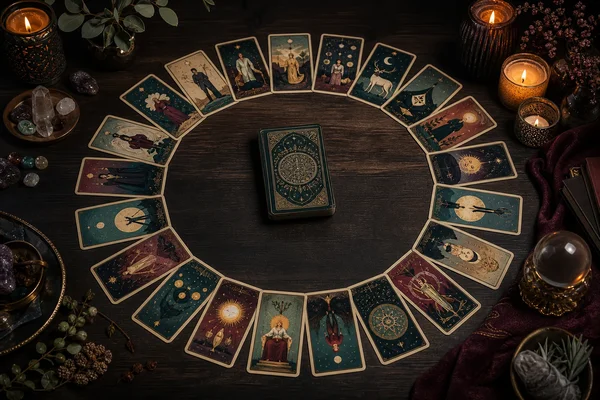
What a 78-Card Tarot Deck Includes
A traditional tarot deck is divided into two main parts. The Major Arcana contains 22 named cards, usually numbered from The Fool as 0 through The World as 21. These cards tend to describe larger themes: change, choice, growth, identity, challenge, renewal, and completion. They are often treated as the deck's big-picture cards because they point toward the wider lesson or turning point in a reading.
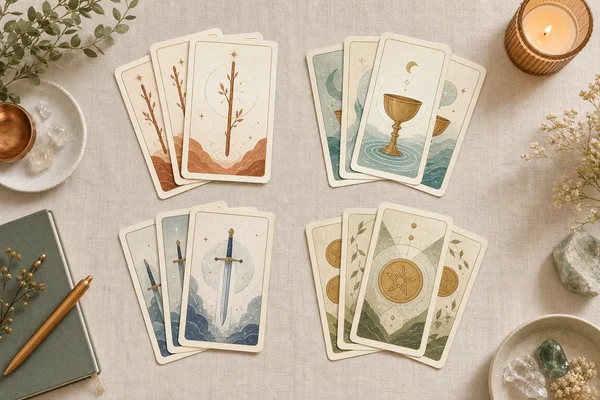
The Minor Arcana contains 56 cards. It is split into four suits: Wands, Cups, Swords, and Pentacles. Each suit has ten numbered cards plus four court cards: Page, Knight, Queen, and King. These cards usually speak to everyday patterns, actions, emotions, thoughts, resources, relationships, and practical choices.
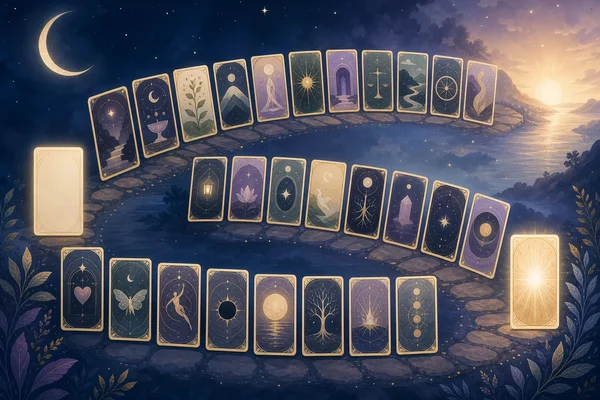
This matters because a full list of tarot cards is more useful when you can see both the order and the structure. Instead of memorizing 78 isolated names, you can learn the deck as a map: a 22-card symbolic journey, then four 14-card suit sequences.
Pictures can help, but they work best as memory aids rather than final answers. When you look at a tarot cards meaning list with pictures, notice the repeated visual cues: open roads, water, tools, crowns, clouds, gardens, towers, and hands. Those images remind you of a card's mood before you reach for a longer definition. The list below keeps the meanings short on purpose, so you can pair each name with a picture in your own deck, a journal page, or a saved reading. If you later make a personal PDF, use it as a study sheet: card name, suit, one keyword, and one sentence in your own words.
That small format keeps study light, repeatable, and easy to revisit.
22 Major Arcana Cards in Order
The Major Arcana is the first part most beginners learn because the names are memorable and the images are highly symbolic. The list below gives each Major Arcana card in standard order with a compact meaning. Different decks may adjust numbering or naming, but this sequence is the common reference point for many modern tarot readings.
| Number | Card | Quick meaning |
|---|---|---|
| 0 | The Fool | New beginning, trust, openness |
| I | The Magician | Skill, intention, focused action |
| II | The High Priestess | Intuition, mystery, inner knowing |
| III | The Empress | Growth, care, creativity |
| IV | The Emperor | Structure, authority, boundaries |
| V | The Hierophant | Tradition, teaching, shared values |
| VI | The Lovers | Choice, connection, alignment |
| VII | The Chariot | Direction, discipline, momentum |
| VIII | Strength | Patience, courage, gentle control |
| IX | The Hermit | Reflection, solitude, wisdom |
| X | Wheel of Fortune | Cycles, timing, change |
| XI | Justice | Balance, fairness, consequences |
| XII | The Hanged Man | Pause, surrender, new view |
| XIII | Death | Ending, release, transformation |
| XIV | Temperance | Moderation, healing, integration |
| XV | The Devil | Attachment, temptation, limitation |
| XVI | The Tower | Disruption, truth, sudden change |
| XVII | The Star | Hope, renewal, calm faith |
| XVIII | The Moon | Uncertainty, dreams, hidden feelings |
| XIX | The Sun | Joy, clarity, confidence |
| XX | Judgement | Awakening, review, decision |
| XXI | The World | Completion, wholeness, arrival |
56 Minor Arcana Cards by Suit
The Minor Arcana is where many readings become practical. A Major Arcana card may say, "This is a major lesson." A Minor Arcana card often says, "Here is how the lesson is showing up today." The suits help you sort the meaning quickly.
Wands usually connect with energy, creativity, action, ambition, and momentum. Cups focus on emotions, intuition, relationships, memory, and care. Swords point to thoughts, communication, conflict, decisions, and mental clarity. Pentacles deal with material life: work, money, health routines, home, time, skill, and stability. These suit meanings are not rigid boxes, but they make a long tarot card meanings list much easier to scan.
Wands Tarot Cards
| Card | Quick meaning |
|---|---|
| Ace of Wands | Spark, opportunity, inspiration |
| Two of Wands | Planning, choice, future view |
| Three of Wands | Expansion, progress, waiting |
| Four of Wands | Celebration, home, milestone |
| Five of Wands | Tension, competition, friction |
| Six of Wands | Recognition, success, confidence |
| Seven of Wands | Defense, courage, standing firm |
| Eight of Wands | Speed, movement, messages |
| Nine of Wands | Resilience, caution, endurance |
| Ten of Wands | Burden, pressure, responsibility |
| Page of Wands | Curiosity, enthusiasm, discovery |
| Knight of Wands | Adventure, impulse, bold action |
| Queen of Wands | Warmth, confidence, magnetism |
| King of Wands | Vision, leadership, initiative |
Cups Tarot Cards
| Card | Quick meaning |
|---|---|
| Ace of Cups | Feeling, opening, compassion |
| Two of Cups | Bond, trust, mutual care |
| Three of Cups | Friendship, joy, community |
| Four of Cups | Boredom, reflection, emotional pause |
| Five of Cups | Loss, regret, perspective |
| Six of Cups | Memory, kindness, past ties |
| Seven of Cups | Options, fantasy, uncertainty |
| Eight of Cups | Leaving, searching, emotional growth |
| Nine of Cups | Contentment, wish, satisfaction |
| Ten of Cups | Harmony, belonging, shared joy |
| Page of Cups | Sensitivity, message, imagination |
| Knight of Cups | Romance, idealism, invitation |
| Queen of Cups | Empathy, intuition, emotional depth |
| King of Cups | Calm, maturity, emotional balance |
Swords Tarot Cards
| Card | Quick meaning |
|---|---|
| Ace of Swords | Truth, clarity, breakthrough |
| Two of Swords | Stalemate, choice, blocked view |
| Three of Swords | Pain, honesty, release |
| Four of Swords | Rest, recovery, quiet |
| Five of Swords | Conflict, pride, hollow win |
| Six of Swords | Transition, distance, healing |
| Seven of Swords | Strategy, secrecy, caution |
| Eight of Swords | Restriction, fear, stuck thinking |
| Nine of Swords | Worry, rumination, sleeplessness |
| Ten of Swords | Ending, exhaustion, surrender |
| Page of Swords | Study, alertness, questions |
| Knight of Swords | Urgency, directness, haste |
| Queen of Swords | Discernment, honesty, independence |
| King of Swords | Logic, authority, clear judgment |
Pentacles Tarot Cards
| Card | Quick meaning |
|---|---|
| Ace of Pentacles | Seed, resource, practical chance |
| Two of Pentacles | Balance, flexibility, priorities |
| Three of Pentacles | Teamwork, craft, learning |
| Four of Pentacles | Security, holding, control |
| Five of Pentacles | Hardship, support, scarcity |
| Six of Pentacles | Giving, receiving, fairness |
| Seven of Pentacles | Patience, investment, assessment |
| Eight of Pentacles | Practice, skill, dedication |
| Nine of Pentacles | Independence, comfort, self-trust |
| Ten of Pentacles | Legacy, family, long-term value |
| Page of Pentacles | Study, planning, grounded curiosity |
| Knight of Pentacles | Consistency, duty, slow progress |
| Queen of Pentacles | Nurturing, stability, practical care |
| King of Pentacles | Stewardship, abundance, reliability |
How to Read This Tarot Cards List Without Getting Lost
The fastest way to use a list of all 78 tarot cards is to read from broad structure to small detail. First, ask whether the card is Major or Minor Arcana. If it is Major Arcana, look for the larger theme: a turning point, lesson, inner shift, or symbolic stage. If it is Minor Arcana, check the suit. The suit gives you the life area before the card number gives you the pattern.
Numbered Minor Arcana cards also follow a loose story. Aces introduce a seed or opening. Twos bring choice or balance. Threes often show growth or collaboration. Fours stabilize. Fives create friction. Sixes restore movement or support. Sevens test commitment. Eights show practice or momentum. Nines intensify the suit. Tens complete a cycle and may reveal what the cycle has cost.
Court cards can be read as people, roles, attitudes, or levels of maturity within a suit. Pages learn. Knights pursue. Queens tend, hold, and embody. Kings direct and manage. For example, the Page of Cups may suggest emotional curiosity, while the King of Cups may suggest emotional steadiness.
Quick Practice: Turn the List Into Better Readings
Lists help most when you use them lightly. Before you pull a card, write one clear question in ordinary language. After the pull, find the card in this tarot cards list and note three things: the card family, the suit or Major Arcana theme, and one keyword that feels relevant. If you are using an online tarot card generator, keep the reading simple enough that you can reflect on it instead of chasing every possible interpretation.
Try this three-step practice:
- Name the card's category: Major Arcana, Wands, Cups, Swords, or Pentacles.
- Choose one keyword from the list that fits your question.
- Write one sentence that begins with, "Today this card invites me to notice..."
This keeps tarot educational and reflective. The card does not need to make a decision for you. It can give you a prompt, a symbol, or a fresh angle. For personal, medical, legal, financial, or safety questions, treat tarot as a reflection aid and rely on qualified guidance for decisions that need professional judgment.
A Simple Way to Keep This Tarot Cards List Useful
The best tarot cards list is not the one you memorize perfectly. It is the one you return to often enough that the deck starts to feel organized. Keep the 22 Major Arcana in order, learn the four suits as life areas, and let the numbered cards show repeated patterns. If you prefer a digital practice, a gentle tarot reflection tool can help you connect the list to real one-card or three-card readings without turning the process into a high-pressure routine.
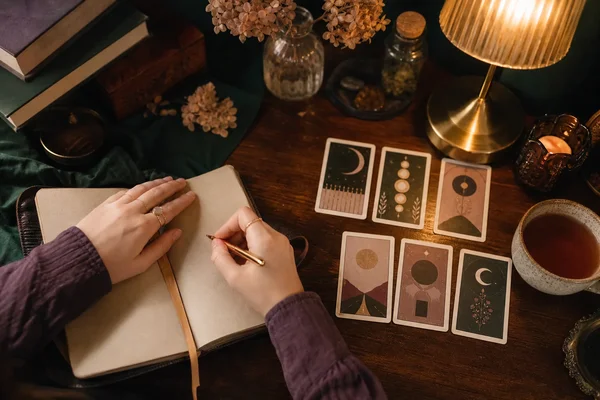
For a printable-style habit, copy the card names into your journal, leave space beside each one, and add your own associations after actual readings. Over time, your list becomes more than a reference. It becomes a record of how you read symbols, ask questions, and notice patterns in your own language.
FAQ
What are the 22 cards in a tarot deck?
The 22 Major Arcana cards are The Fool, The Magician, The High Priestess, The Empress, The Emperor, The Hierophant, The Lovers, The Chariot, Strength, The Hermit, Wheel of Fortune, Justice, The Hanged Man, Death, Temperance, The Devil, The Tower, The Star, The Moon, The Sun, Judgement, and The World. They are usually numbered from 0 to 21 and are often read as the deck's larger symbolic lessons.
What are all the tarot cards' names?
All tarot card names include the 22 Major Arcana cards plus the 56 Minor Arcana cards. The Minor Arcana is divided into Wands, Cups, Swords, and Pentacles. Each suit contains Ace through Ten, then Page, Knight, Queen, and King. Together, these make the full 78-card tarot deck.
What are the 56 tarot cards?
The 56 tarot cards are the Minor Arcana. They include 14 Wands, 14 Cups, 14 Swords, and 14 Pentacles. In each suit, there are ten numbered cards and four court cards. These cards usually describe everyday experiences, choices, emotions, communication, work, resources, and practical patterns.
What are 78 tarot cards?
The phrase "78 tarot cards" refers to the complete modern tarot deck structure: 22 Major Arcana cards and 56 Minor Arcana cards. The Major Arcana gives the big symbolic arc. The Minor Arcana divides daily life into four suits and gives more specific reading details.
What is The Hierophant in a tarot cards list?
The Hierophant is Major Arcana card V. In a quick meaning list, it often points to tradition, teaching, shared values, study, mentorship, or a formal belief system. In a reflective reading, it can invite you to ask whose guidance you trust and which rules still feel meaningful.
What does The Star mean in tarot?
The Star is Major Arcana card XVII. Its quick meanings include hope, renewal, calm faith, inspiration, and gentle recovery after difficulty. It is often read as a card of perspective and emotional steadiness rather than instant certainty.
Is there one fixed tarot card meaning list?
No. Most tarot card meanings share common roots, especially in Rider-Waite-Smith style decks, but readers and deck creators may emphasize different symbols. A short list is useful for learning structure. A fuller reading also considers the question, card position, neighboring cards, upright or reversed orientation, and your own reflection.